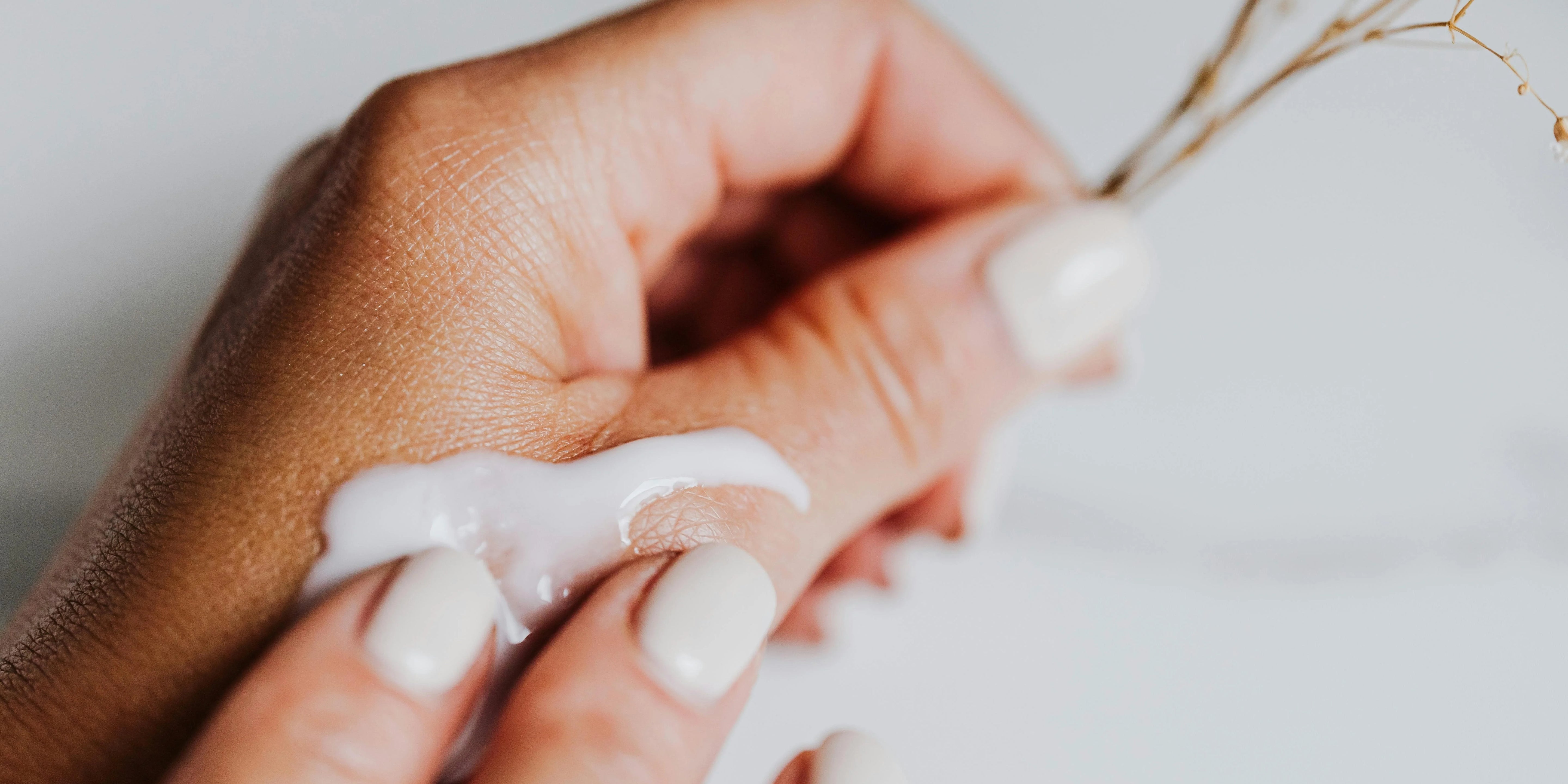

Be honest: do you also have a bathroom cabinet full of products you don't really understand? A serum here, a toner there, and three different moisturizers you no longer know when to use. You are certainly not alone.
Good skincare sometimes seems more complicated than it is. The beauty industry wants you to believe you need dozens of products, but the truth is much simpler. Your skin only has a few basic needs, and once you understand them, you'll know exactly which products truly make a difference.
In this tutorial, we will walk you through skincare step by step. You'll learn which ingredients really work, which products you can skip, and how to build a simple routine that suits your skin. No complicated jargon, no overwhelming lists, just practical explanations you can immediately apply. Whether you're new to skincare or just want to reset, after reading this article, you'll know exactly what your skin needs.
How your skin actually works (and why that's the starting point)
Your skin is the largest organ of your body, and it does much more than just sit there. It protects you from everything that comes your way from the outside: bacteria, dirt, wind, and sunlight. It regulates your temperature by sweating when it's hot and sending blood inward when it's cold. And it signals: through tiny nerve endings, you feel if something is hot, sharp, soft, or irritating. Three tasks at once, all day long, without you even realizing it.
The brick wall that holds your skin together
The most fascinating part is the outermost layer: the skin barrier. Imagine a brick wall. The bricks are your skin cells, stacked firmly. The mortar between those bricks consists of ceramides, along with fatty acids and other lipids (fats). This mortar keeps everything waterproof and in place. As long as this structure is intact, moisture stays in and irritants stay out. But if the mortar cracks, due to aggressive cleansing, too much exfoliation, or just dry air, small leaks occur. Moisture escapes, and irritants penetrate. Your skin feels tight, red, or sensitive, and that's precisely why.
Not a buzzword, but a logical starting point
Barrier repair might sound like a marketing term, but it's actually very straightforward. Skin with a healthy barrier dries out less quickly, reacts less intensely to irritants, and can take better care of itself. That's not a miracle; that's just how it works. In 2026, consumers and dermatologists will return to that basic principle, moving away from harsh active ingredients and ten-step routines. Gentle formulas, mild cleansing, and ingredients that support the barrier, such as ceramides and niacinamide, will be central. Research from the Cleveland Clinic confirms this shift towards simplicity and barrier care as the foundation of healthy skincare.
When you understand what your skin does, you also understand what it needs. And that is almost always less than you think.
Building a simple skincare routine in three steps
Step 1: Cleanse, but gently
Cleansing is the foundation of any skincare routine, but it doesn't mean scrubbing as hard as possible. The goal is simple: remove dirt, excess sebum, and residues of sunscreen or makeup, without damaging your skin's protective layer. That protective layer, the skin barrier we talked about earlier, is precisely what you want to preserve. Some cleansing products are too aggressive for this. They not only remove dirt but also the natural oils your skin needs. The result: a tight and dry feeling after washing, which is actually a sign that something is wrong. At Mayteo, cleansing products are based on the principle of plant-based, gentle ingredients that cleanse without stripping. Think of a texture that leaves your skin feeling fresh, not tight.
Step 2: Hydrate and nourish, because they're not the same thing
This is where it gets a little interesting, and it's worth pausing to consider. There are two types of active ingredients that provide moisture to your skin, but they work in very different ways.
Moisture-retaining ingredients are like a sponge. They attract water and hold it in the skin. Hyaluronic acid is the best-known example. You'll find it in serums and light creams.
Nourishing, barrier-strengthening ingredients work differently. They fill in the small cracks in the skin barrier, like cement between the tiles. Ceramides are the best example here. They occur naturally in your skin but can decrease due to age, cold, or aggressive products. A good nourishing cream replenishes this.
So you actually need both: something that binds moisture, and something that strengthens the barrier so that moisture stays put. Mayteo's day creams combine this approach, without needing a scientific dissertation to understand the packaging.
Step 3: Protect during the day, repair at night
During the day, your biggest enemy is the sun. A day cream with SPF is not a luxury; it's simply logical when you know that UV radiation ages the skin and stresses the barrier. In the evening, the logic reverses. While you sleep, your skin works harder than during the day on repair and cell renewal. A nourishing night cream, like Mayteo's, capitalizes on this natural recovery moment with ingredients that support the barrier and give the skin space to recover at night.
Your concrete daily schedule
Morning: cleanse, hydrate with serum or day cream, finish with SPF. Evening: cleanse, optionally apply a serum or treatment, finish with a nourishing night cream.
More products do not automatically mean better results. Consistency is what counts. This also ties into an interesting finding: recent consumer research shows that 46.6% of people primarily experience their skincare routine as a moment of self-care, not an aesthetic obligation. A routine that feels like something you do for yourself is a routine you'll stick with. And that, more than any ingredient, is what makes the difference for your skin in the long run.
Three ingredients that really make a difference (explained without jargon)
Now that you know how your skin works and how to build a basic routine, it's time to take a moment to consider what's actually in those products. Because an ingredient list sometimes contains dozens of names that sound like a chemistry lesson. You don't need to know them all. But three of them are worth understanding, because they do something that really matters.
Ceramides: the glue of your skin barrier
Imagine your skin as a brick wall. The skin cells are the bricks, and ceramides are the cement between them. They are naturally present in the outer layer of your skin and ensure that this layer remains firm, supple, and permeable to moisture. Without enough ceramides, small gaps appear in that wall, causing moisture to evaporate and irritating substances to penetrate more easily. This then feels like dryness, tightness, or skin that reacts quickly to everything.
The skin produces ceramides itself, but that production decreases with age and can also be disrupted by cold, aggressive cleansers, or skin that is naturally sensitive. For dry, sensitive, and mature skin, ceramides are therefore particularly relevant, as they supplement what the skin itself is less able to maintain. On an ingredient list, you can recognize them by names such as ceramide NP, ceramide AP, or ceramide EOP. If you see these, you know that the product actively supports your skin's barrier function.
Niacinamide: the quiet achiever
Niacinamide is a form of vitamin B3, and it is probably the most underrated ingredient in skincare. Not because it creates a spectacle, but precisely because it doesn't. It works quietly and versatilely at the same time. After a few weeks of regular use, you'll notice that your skin texture feels more even, that pores look less prominent, and that your skin simply appears calmer, less red, less erratic.
Niacinamide also supports the skin's barrier function, similar to ceramides but through a different path. What makes it extra interesting: it is one of the few active ingredients that works well with almost everything. You don't need to use it at a separate time or combine it only with specific other substances. It just fits into your routine. The difference between superficial care and truly active ingredients is important, and niacinamide clearly falls into the latter category.
Bakuchiol: the plant-based alternative to retinol
Retinol is one of the most researched ingredients in skincare and has a strong reputation when it comes to supporting cell renewal and improving skin texture in mature skin. The downside is equally well-known: retinol can cause irritation, redness, flaking, and requires an adjustment period that can be quite uncomfortable for sensitive skin.
Bakuchiol is a plant-based ingredient, extracted from the seeds of the babchi plant, and in peer-reviewed research, it has shown to activate similar processes in the skin as retinol, but without the aggressiveness. A 2019 study in the British Journal of Dermatology directly compared the two and found similar results in terms of skin texture and fine lines, but significantly less irritation with bakuchiol. Being honest also means stating what it is not: bakuchiol has less long-term research behind it than retinol, and it may work slightly more gradually. But for those with sensitive skin or who cannot tolerate retinol, it is a serious, substantiated choice.
Three ingredients, one logic
What ceramides, niacinamide, and bakuchiol have in common is that they are not a hype that is trending today and forgotten tomorrow. They are well-substantiated, plant-based, or plant-compatible substances that support the skin in what it is already trying to do itself. They repair, strengthen, stimulate, but without overwhelming the skin.
This aligns precisely with how Mayteo approaches skincare. And if you want to know whether the ingredients in a product actually meet strict standards for origin and processing, then Ecocert COSMOS certification is a reliable benchmark. It is not a self-declaration by a brand, but an independent, internationally recognized quality mark that sets verifiable requirements. No marketing, just a label with substance.
What your skin doesn't actually need
Now that you know what your skin needs, it's at least as useful to look at what it would rather not have. Not to create fear, but because a little insight here can truly make a difference.
Sulfates: powerful cleansing isn't always better
SLS (Sodium Lauryl Sulfate) and SLES (Sodium Laureth Sulfate) are surfactants found in many shampoos and facial cleansers. They foam well and clean thoroughly, but they are also quite powerful. With regular use, they can disrupt your skin's natural lipid layer, the layer that retains moisture and keeps irritants out. The result: skin that feels tight, quickly turns red, or appears drier than it actually is. Gentle alternatives simply work better for most skin types, without compromising on a clean feeling.
Fragrance: nice for your nose, less nice for your skin
Synthetic fragrances are among the most common sources of skin irritation in cosmetic products. This doesn't mean everyone is affected, as many people use fragranced products for years without any problems. But if your skin regularly reacts, turns red, or is just a bit more sensitive, then fragrance is a logical first suspect to eliminate. The broader movement in skincare confirms this shift towards milder, low-irritation formulations. Mayteo has developed a completely fragrance-free line for people with reactive or very sensitive skin. No blame on your current products, just an honest alternative if your skin needs more rest.
Too many active ingredients at once
Layering retinol on glycolic acid, followed by a peptide serum and a niacinamide toner, sounds like a powerful routine, but your skin sometimes thinks differently. The popularity of "skin cycling," rotating active ingredients over several days, arose precisely because so many people had thrown their skin out of balance by doing too much at once. Signs that your routine is asking too much: a burning sensation after application, persistent redness, or skin that suddenly seems more sensitive than usual. Fewer products, used consistently, more often yield better results than an extensive stack that overloads your skin.
TikTok trends: not always bad, but not for everyone either
Slugging, sealing your skin with a thick layer of Vaseline as a final step, is a good example of this. For dry, irritated skin, it can temporarily provide relief. For oilier or acne-prone skin, it works counterproductively. The broader movement in skincare towards 2026 is precisely about making more conscious choices, moving away from impulsive hypes and towards products that suit your skin specifically. A trend doesn't have to be bad, but it's always worth asking yourself: does this work for my skin, or am I just following an algorithm?
At Mayteo, we believe that honestly stating what doesn't work is a greater service than promoting a separate product for every skin type. Your skin deserves an honest conversation, not a sales pitch.
What does 'natural skincare' actually mean, and how do you recognize the real deal?
The word "natural" on a bottle of skincare sounds reassuring, but legally speaking, it means nothing at all. Any brand can use that word, without a single rule existing about what exactly should be in the product. It's a marketing term, not a quality label. And that's precisely where it gets interesting.
What genuine certification *does* do
If you see the COSMOS logo, from the independent organization Ecocert, on the packaging, you know that someone other than the brand itself has looked at what's in that jar. COSMOS stands for COSMetic Organic and Natural Standard, and it is an internationally recognized standard that verifies where ingredients come from, how they are processed, and which substances are absolutely forbidden, such as synthetic fragrances, parabens, silicones, and genetically modified ingredients. That's an objective guarantee, not a promise on the front of a package.
Within COSMOS, there are two levels. COSMOS Natural means that all ingredients are of natural origin and comply with the rules regarding processing and prohibited substances, but there is no mandatory minimum for organically grown raw materials. COSMOS Organic goes a step further: a significant portion of the ingredients must be organically grown, often 95 percent or more of the plant-based ingredients. Both labels offer confidence, but Organic also tells you something about how the plants themselves were cultivated.
The EU as a safety net
On top of that, every product manufactured or sold in the EU is subject to some of the strictest cosmetic legislation in the world. Every product must have an official safety report, be registered in a European database, and have a responsible person within the EU. That's not a marketing story; that's just the law. Certified products comply with this and with the additional requirements of COSMOS.
More choice, but also more reason to be critical
The global natural cosmetics market already reached 31.4 billion dollars in 2024 and is growing at 8.9 percent per year towards 52.2 billion dollars in 2030. More choice is nice, but it also means there's more room for products that claim to be "natural" without any substance behind it. Certifications therefore become not a nice-to-have, but a true guide.
The practical tip to conclude: look for the COSMOS logo on the packaging, or browse through the ingredients list for recognizable plant-based names like Aloe Barbadensis Leaf Juice or Cocos Nucifera Oil. Curiosity and a bit of healthy skepticism are better guides than a pretty label or a big name.
Adapting skincare to your skin type: an honest look
Your skin is not one thing. It is a living system that reacts to everything happening around and within it. Nevertheless, it's helpful to have a starting point, and that's precisely what skin types are for. Not as a box you'll fit into forever, but as a compass for your routine.
The four types, in plain words
Dry skin feels tight, sometimes shortly after cleansing. It absorbs quickly, can sometimes flake slightly, and struggles to retain enough moisture on its own. Oily skin shines, especially on the forehead, nose, and chin, and has a greater tendency for clogged pores. Combination skin is in between: oily zones in the center of the face, drier cheeks. And then there's sensitive skin, which reacts quickly to products, cold, wind, or a stressful week with redness, a burning sensation, or itching. This is not a weakness in your skin, but a signal that its barrier needs extra attention.
A quick self-test: cleanse your face with a mild product, pat dry, and wait half an hour. Does your skin feel tight? Then it tends towards dry. Does it shine? Then rather oily. A combination of both? Combination. Does it react regularly to products or environmental factors? Then it likely has sensitive traits.
What every skin needs
For dry skin, ceramides (the "glue" between your skin cells, as explained earlier) and nourishing plant oils are the best friends. They help retain moisture and strengthen the barrier from within.
For sensitive skin, less is often more. Choose fragrance-free products, as perfume is one of the most common triggers for irritation. Niacinamide (that calming vitamin B3 ingredient) is excellent here. Avoid high concentrations of aggressive active ingredients, especially at first. Mayteo's range for sensitive skin, including a completely fragrance-free line for people with highly reactive skin, is precisely tailored to this need.
For mature skin, ceramides are relevant again, supplemented with bakuchiol (the plant-based alternative to retinol) and hydrating serums that support skin structure.
Your skin changes, and your routine can change with it
Skin types are not fixed forever. Seasons have a major influence: in winter, even normal-oily skin sometimes needs extra hydration, while a light summer consistency falls short in the colder months. Stress, hormonal fluctuations, and age all play a role. It pays to review your routine at least twice a year, at the transition from summer to winter and vice versa.
A brief note on the littlest ones
Baby skin deserves a separate mention, as it is fundamentally different from adult skin. It is thinner, more sensitive, and has a different pH value. Adult products, even mild variants, are therefore not automatically suitable for babies. Mayteo's Luna Baby line is COSMOS Organic-certified and dermatologically tested, and specially developed for the skin of newborns and young children.
Skincare as self-care: why that difference matters
Why do you do skincare, actually? It's a fair question, and the answer might be different than you think. Research shows that 46.6% of consumers primarily experience their skincare routine as a way to feel good, not to look different. That's a beautiful shift. Skincare is increasingly less an aesthetic obligation, and increasingly more a daily moment of self-care. Not as a luxury, but as something ordinary and concrete: a moment to pause, to feel, to be present.
This also aligns with broader signals. Self-care is consistently higher on the agenda, and more and more people are seeking that peace at home instead of outside. The rise of the 'home as a spa' concept is a sign of this: people want a moment of calm in their own bathroom, not necessarily ten new products.
And that's where something interesting lies. Because that moment of peace has nothing to do with how many bottles are on your shelf. It has to do with the quality of the moment itself. A routine of two or three products that you understand, that feel good on your skin, and that you use consistently, does more than a complicated system you abandon after a week. Less is more, if it feels good.
That is also the core of how Mayteo views skincare. Plant-based formulas, honest about what they do and what they don't, without exaggerated promises. No spectacular claims, but products that support your skin without overtaxing it. This fits a conscious, calm approach, for people who want to understand what they are using.
Skincare doesn't have to be a complicated system. Be curious about what's in those bottles, how your skin reacts, and how that feels. That curious, attentive moment, that's actually the beginning of good skincare.
Ready to discover more? Here's how to take the next step
You can take three things away from everything you've read here: your skin works best when you support its barrier instead of overloading it, a good routine doesn't have to be complicated, and honest products with recognizable ingredients do more for you than a cabinet full of promises.
Want to discover more? On mayteo.com you'll find the full ingredient list for each product, and with the routine builder you can discover which products suit your skin. And if your skin is extra sensitive, or if you have children, the Luna Baby line is a great place to look further, with mild formulas that are transparent about what's inside.
The ultimate goal? Not perfect skin. Just skin that you understand a little better, and that you feel comfortable in.
Conclusion
Good skincare really doesn't have to be complicated. Remember the key lessons from this article: your skin benefits from a simple basic routine, the right ingredients make more of a difference than the quantity of products, and less is often more. Moreover, every skin is different, so listen to what your skin needs instead of blindly following trends.
Now it's time to take action. Start today by tidying your bathroom cabinet and keeping only the products that truly serve a purpose. Build your routine from the ground up and only add what's necessary.
Your skin will thank you for the simplicity. With the right knowledge and a little patience, you'll achieve better results than ever, without stress and without spending a fortune.